Alfred Williams was a Swindon steam-hammer operator who rose before dawn each day to teach himself Greek, Latin, and Sanskrit, eventually producing one of the most important literary works about industrial England. His 1915 book Life in a Railway Factory remains, in the words of one historian, "undisputed as the most important literary work ever produced in Swindon, about Swindon."
From South Marston to the Steam Hammer
Alfred Owen Williams was born on 7 February 1877 at Cambria Cottage in South Marston, a village three miles north-east of Swindon town centre. His father abandoned the family when Alfred was five, leaving the boy to a childhood of hard labour. At eight he became a "half-timer," splitting his days between schooling and agricultural work. By eleven he was a full-time farm labourer.
In 1892, aged fourteen, Williams entered the Great Western Railway's Swindon Works, the principal maintenance centre for the west of England. He began as a rivet hotter, progressed to furnace boy, and by 1893 had become a drop-stamper, operating the massive steam hammer that would give him his enduring nickname.
For twenty-three years he worked in the stamping shop, a deafening environment of molten metal and industrial machinery. The works employed an estimated three-quarters of Swindon's entire workforce at its height. Williams walked the four miles from South Marston each day, labouring at the furnace while building a literary career in the hours before and after his shift.
Self-Education Against the Odds
Williams was almost entirely self-taught. Rising at 4am, he studied Greek, French, and Latin before walking to the factory. He later added Sanskrit to his languages. His formal schooling had ended early, yet he would eventually lecture at Swindon's Mechanics' Institute, speaking with authority on literature and language to audiences who knew him first as a factory hand.
In 1903 he married Mary Peck and moved to Dryden Cottage in South Marston. His first collection of poems, Songs in Wiltshire, was published in 1909. The volume included "Liddington Hill," a meditation on the Wiltshire landscape that opens: "The friendship of a hill I know / Above the rising down / Where the balmy southern breezes blow / But a mile or two from town."
Further volumes followed in quick succession: Poems in Wiltshire (1911), Nature and Other Poems (1912), and Cor Cordium (1913). His prose work A Wiltshire Village (1912) offered observations of South Marston life, whilst Villages of the White Horse (1913) ranged across the wider region.
Writing the Factory
Life in a Railway Factory was written in 1915, composed in just twelve weeks "at night, after leaving the forge." Williams had kept his manuscript secret during his employment; the work was too candid to risk discovery. The book offered an unvarnished insider's account of the GWR works: the heat, the danger, the hierarchies, and the daily grind of industrial labour.
The Times reviewed it as "pure literature" and "a social study," praising Williams as "a born observer with a gift of words and a love of truth." The Daily Chronicle called it "a book of revelation." Yet the book sold poorly in Swindon itself; workers feared association with a critical account of their employer. Only about a dozen copies found buyers in the town during the first year.
Williams left the works in September 1914, finally freed by ill health. Above his furnace he chalked the Latin word "Vici" — I have conquered.
War Service and Later Years
Williams served as a gunner in the Royal Field Artillery during the First World War, posted to India. The experience would later lend its name to his home: in 1921, he and Mary completed a cottage they named "Ranikhet," after the hill station where he had been stationed. They had built it themselves using bricks salvaged from a derelict canal lock.
His later work included Round About the Upper Thames (1922) and Folk Songs of the Upper Thames (1923), the latter preserving hundreds of traditional lyrics he had collected by cycling around Wiltshire and Oxfordshire villages in winter. A Selected Poems appeared in 1926.
Despite critical recognition, Williams never achieved financial security. He spent his life savings publishing his books. Grants from the Royal Literary Fund provided some relief, and friends brought his plight to the attention of three prime ministers, though a permanent civil pension remained elusive. By 1930 he and Mary were, in contemporary accounts, "hopelessly poor."
Death and Legacy
Alfred Williams died at Ranikhet cottage on 10 April 1930, aged fifty-two. His wife Mary followed within weeks. They are buried together at South Marston.
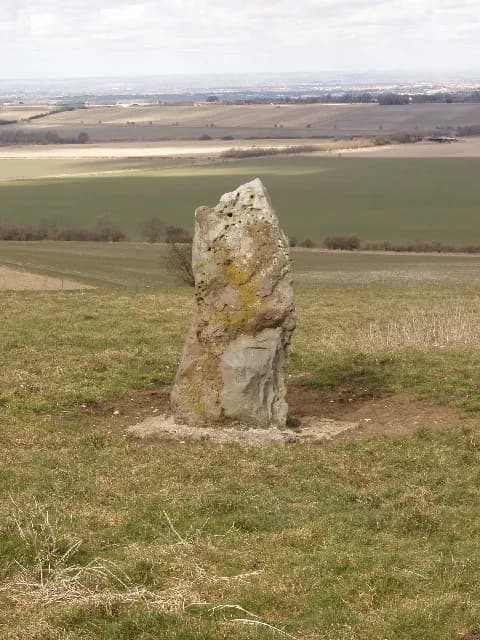
Today a concrete bust by Harry Carleton Attwood, held by Museum and Art Swindon, preserves his likeness. The memorial stone on nearby Burderop Down, shared with the naturalist Richard Jefferies, marks his connection to the Wiltshire landscape he loved and described. Life in a Railway Factory is available freely through Project Gutenberg, testament to a working man who found literature in the roar of the steam hammer and the quiet hours before dawn.