Long before the National Health Service opened its doors in 1948, Swindon railway workers were already receiving cradle-to-grave medical care. The Great Western Railway's Medical Fund Society, established in December 1847, created a comprehensive healthcare model that would later serve as the blueprint for the NHS itself.
The World's First Compulsory Industrial Health Scheme
When the Great Western Railway opened its Swindon Works in 1843, designed by Isambard Kingdom Brunel, the company faced a challenge common to Victorian industry: keeping its workforce healthy. The solution, pioneered by Sir Daniel Gooch, the railway's first locomotive superintendent, was revolutionary.
In December 1847, the Medical Fund Society was founded as a compulsory subscription sick fund. Swindon Works became the only industrial organisation in the world requiring medical fund membership as a condition of employment. Workers paid deductions from their wages; in return, they and their families received comprehensive care.
Building a Healthcare Infrastructure
The system expanded rapidly. By 1871, the Medical Fund Hospital opened in a converted former armoury with five beds, funded by the GWR and a £1,000 donation from Sir Daniel Gooch himself. The hospital's dispensary averaged 700 visitors daily during winter months.
Healthcare provision grew to include: - Park House, built in 1876, where workers underwent pre-employment medical examinations - Artificial limbs, crafted by carriage and wagon works craftsmen from 1878 - Dental surgery, opened in 1887, where the dentist extracted over 2,000 teeth in the first few months - A works undertaker with horse-drawn hearse, free to members, providing the "cradle-to-grave" coverage that would later define the NHS
The Turkish Baths and Health Centre
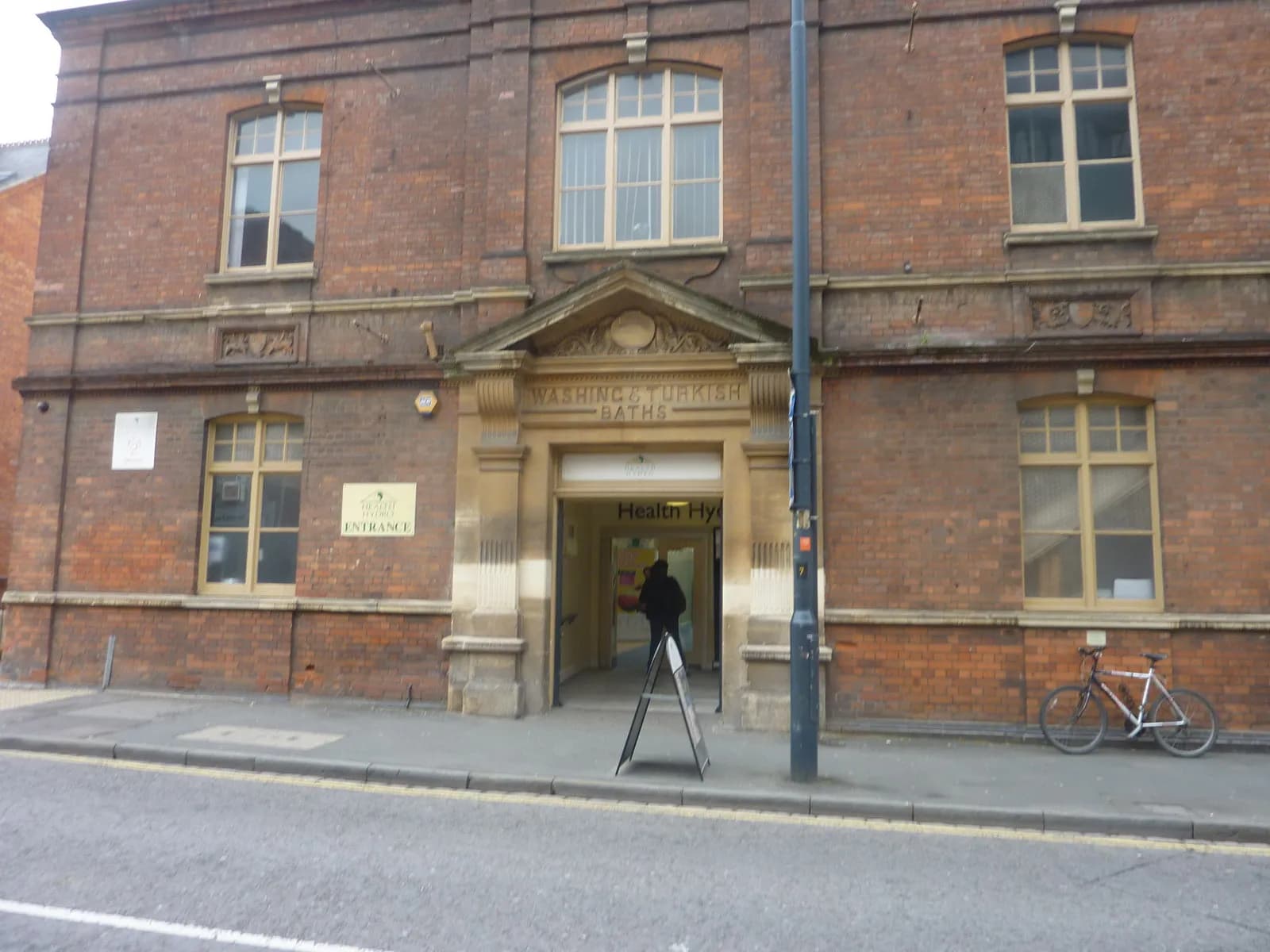
The railway's commitment to worker welfare extended beyond medical treatment. The first Victorian Turkish baths opened on 1 October 1868 in Taunton Street, followed by swimming baths in 1869. In 1892, the Milton Road health centre opened, combining consulting rooms, a dispensary, two swimming baths, Turkish baths, and washing baths under one roof.
The current Victorian Turkish baths, opened on 10 December 1906 in the Faringdon Road building, remain the longest surviving Victorian Turkish baths in the world. The facility, later known as the Health Hydro, operated until 2023 and is Grade II* listed.
From Swindon to Whitehall
The connection between Swindon's pioneering system and the NHS is explicit. Aneurin "Nye" Bevan, Minister of Health from 1945 to 1951 and the architect of the NHS, stated plainly: "There was a complete health service in Swindon. All we had to do was expand it to the country."
Bevan's vision for the 1948 National Health Service drew directly from the cradle-to-grave model developed in Swindon a century earlier. When the Medical Fund services transferred to the NHS in 1948, the Milton Road building became an NHS Health Centre.
Legacy and Heritage
The Medical Fund Hospital operated until 1960, when it closed and Princess Margaret Hospital opened. With 800 beds, Princess Margaret was the first purpose-built NHS hospital in the United Kingdom.
Other remnants of this healthcare heritage remain. The Mechanics' Institute, founded in 1844 and also supported by the GWR, provided education and recreation for workers. Sir Daniel Gooch served as its first president. The building, Grade II* listed, was saved from demolition in the 1960s by Sir John Betjeman.
Swindon's role in creating Britain's first comprehensive healthcare system remains an underappreciated chapter in both local and national history. From compulsory medical subscriptions to artificial limbs, dental care, and funeral services, the Great Western Railway created a model of worker welfare that anticipated the welfare state by a hundred years.